What a Reception Voicebot Actually Handles on a Live Call
A demo call is a rehearsed call. Here is the unrehearsed version: the four kinds of call that hit a business line, why transfer logic matters more than voice quality, and why containment rate on its own is a vanity metric.
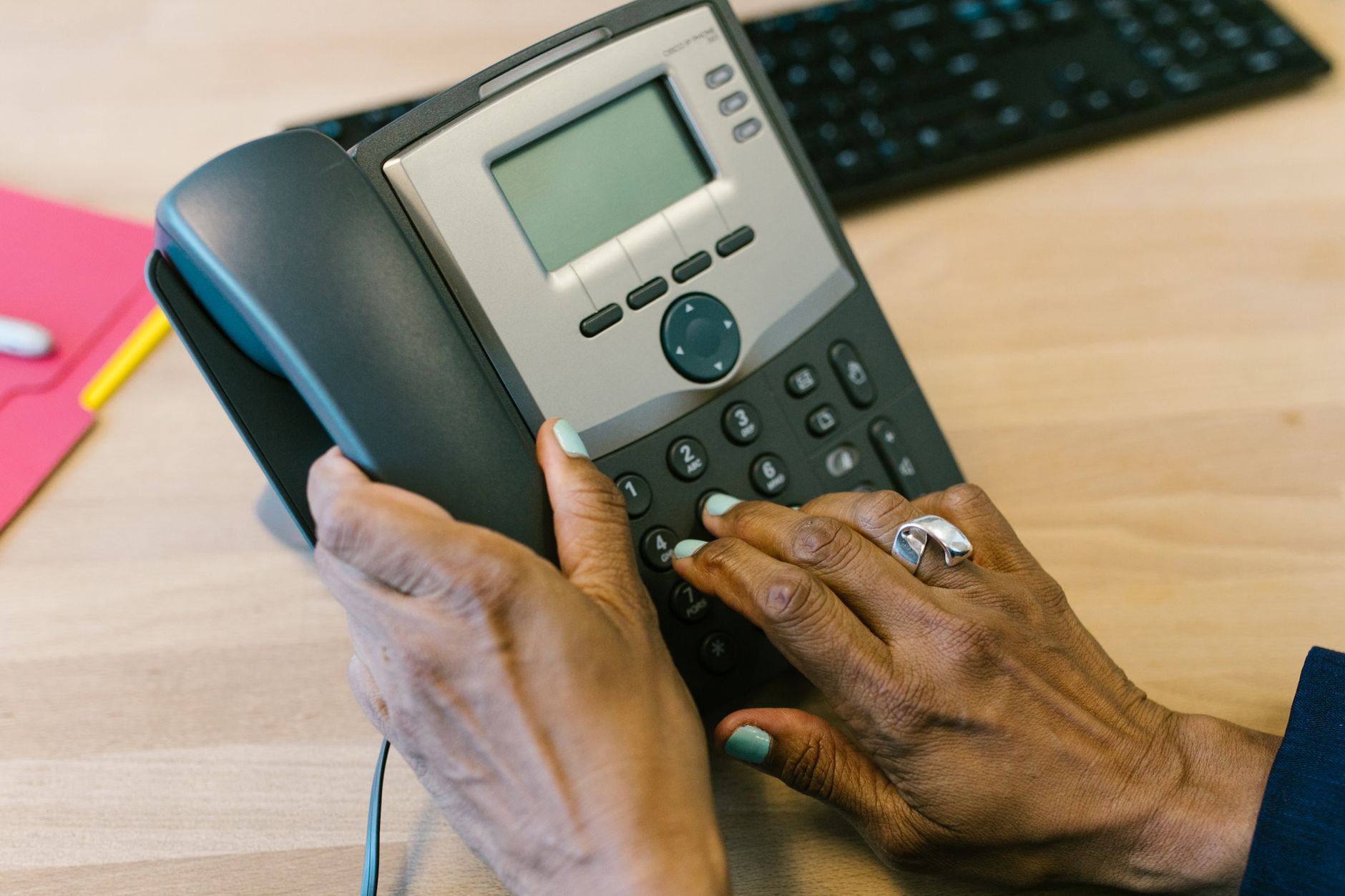
People who search for a reception voicebot have usually already had the realizing moment. Calls are going unanswered at lunch, after five, and during every stretch when the person who normally picks up is dealing with someone standing in front of them. The question is no longer whether to put something on the line. It is what the technology actually does once a real caller is on it.
Vendor demos are not much help there, because a demo call is a rehearsed call. What follows is the unrehearsed version: which calls a voicebot genuinely resolves, which ones it must hand off, what breaks it in the field, and how to tell whether the one you deployed is working or just appearing to.
The four kinds of call that hit a business line
Almost every inbound call to a small or mid-sized business falls into one of four buckets, and a voicebot performs very differently across them.
Known-answer questions. Hours. Address and parking. Whether you take a particular insurance, payment method or brand. Whether you are open the Friday after Thanksgiving. Whether a specific service is something you do at all. A voicebot handles these essentially perfectly, because the answer is a fact that does not change during the call. In most businesses this is the largest single category of inbound volume and the one swallowing the most staff attention for the least value. If a voicebot did nothing but this, it would usually pay for itself.
Transactional requests. Book an appointment, reschedule one, cancel one, confirm what time mine is, request a callback. A voicebot handles these well with one hard condition: it must have write access to the actual calendar or system of record. Without that, it can take the request and email a human to enter it, which is a slightly better voicemail and not a reception agent. Ask the vendor to show you a booking appearing in your live calendar during the call, not on a slide.
Qualification and routing. Which location, which department, new customer or existing, what is this regarding, how urgent is it. This is where a voicebot quietly earns the most, because it converts a two-minute human triage conversation into a transfer that arrives with context already attached. The person who picks up starts the call already knowing who it is and what it is about.
Judgment calls. An upset customer. A clinical, legal or financial question. A price negotiation. An unusual exception that requires someone to decide something on behalf of the business. A voicebot should not attempt these, and any vendor telling you theirs handles them is selling you a future escalation problem rather than a solution. The correct behavior is a fast, graceful handoff.
Transfer logic is the actual product
Buyers evaluate voicebots on how natural the voice sounds. Callers experience them almost entirely through what happens when the bot cannot help. That means transfer design, not voice quality, determines whether the deployment succeeds.
Decide these explicitly before launch rather than discovering them in production:
Warm or cold. A warm transfer passes a summary to the human who picks up, so the caller does not repeat themselves. A cold transfer dumps the call. Warm costs more to set up and is worth it.
What happens when nobody answers the transfer. This is the gap that produces genuinely angry callers. The bot politely says it is connecting you to someone, and then the call rings out into nothing. There must be a defined fallback: back to the bot to take a message, to a specific voicemail, to a second number, or to a scheduled callback that someone is actually accountable for.
The person who just says "person." Some callers will never knowingly talk to a machine. Asking for a human must work immediately, on the first request, without a negotiation. Making that path hard is the fastest way to turn a tolerable experience into a complaint.
A failure ceiling. Set a rule that after two consecutive failures to understand, the bot stops trying and transfers. Without that ceiling, a bot will loop a confused caller indefinitely, and that loop is what people remember and repeat to their friends.
After hours. At two in the morning there is no human to transfer to, so the bot's job changes. It should be capturing a complete, structured message and setting an honest expectation about when someone will call back, not pretending a transfer is available.
What breaks in the field
Five things cause most real-world voicebot failures, and none of them appear in a demo.
Background noise. Callers phone from cars, sidewalks, shop floors and busy restaurants. Recognition quality falls off sharply with ambient noise, and no amount of prompt tuning fixes it. Test with noisy calls deliberately.
Accents and code-switching. In the New York and New Jersey market this is not an edge case, it is the median caller. A bot tuned on clean studio audio will struggle with callers who switch languages mid-sentence or carry a strong regional or non-native accent. Insist on testing against recordings of your own callers rather than the vendor's sample set, and if a meaningful share of your callers prefer another language, treat that as a configuration requirement rather than a later phase.
Interruption handling. Real people talk over prompts. If the bot cannot be interrupted mid-sentence, every experienced caller will fight it, because experienced callers are used to pressing through phone trees.
Names, addresses and digits. This is where accuracy matters most and performs worst. Street names, surnames, apartment numbers, phone numbers and policy numbers all get mangled. The fix is procedural rather than technical: the bot should read digits and spellings back and get confirmation before committing anything.
Spam and robocalls. A noticeable share of inbound calls to a business line are automated. A voicebot will dutifully converse with them and consume metered minutes doing it. Ask how the vendor detects and drops those.
Integration and guardrail checklist
Before signing anything, confirm the voicebot can do each of the following in your environment, not in principle: write to your live calendar, create and update a contact record in your CRM, execute a transfer through your existing phone system, route differently by time of day, and deliver a transcript and recording of every call somewhere a human will actually read them. If any of those is answered with a roadmap date rather than a demonstration, treat the capability as absent. Getting those connections right is ordinary CRM and calendar integration work, and it is where most of the real implementation effort goes.
On the guardrail side, write the restrictions down as configuration rather than hoping the model behaves. The bot should disclose at the top of the call that it is an automated assistant, and disclose plainly if the call is being recorded. It should not quote prices unless you have explicitly configured specific prices it is allowed to state. It should not offer clinical, legal or financial advice under any circumstance. It should not promise a response timeline your team cannot keep. And it should carry a hard trigger list of phrases, including anything suggesting an emergency, a complaint, or a legal matter, that forces an immediate transfer with no further attempt to assist.
Measuring it honestly
The metric vendors lead with is containment rate, meaning the share of calls resolved without a human. On its own it is a vanity metric, and worse, it is gameable in exactly the wrong direction. A bot that stonewalls callers and makes transfers difficult posts an excellent containment rate while actively losing you business.
Watch these together instead. Containment rate, paired with transfer rate broken out by reason, so you can see whether handoffs are happening for legitimate judgment calls or because the bot keeps failing on the same question. Appointments actually created, which is the number that connects to revenue. Calls captured outside business hours, which is usually the clearest win and the easiest to attribute. Abandonment during the bot segment, meaning callers who hung up while talking to it, which is the real dissatisfaction signal and the one nobody volunteers. And a standing weekly habit of a human reading a sample of transcripts, because the specific thing your bot is getting wrong is almost always obvious within ten calls and invisible in any dashboard.
Roll it out in stages
Do not move your main line to a voicebot on day one. Start where the alternative is nothing at all: after hours and overflow calls that are currently going to voicemail. There is no downside risk there, and two weeks of real transcripts will teach you more than any evaluation period. Then add daytime overflow, so the bot picks up only when every human line is busy. Only after that, if the transcripts support it, consider putting it in front of the main line, and keep an instant path to a human when you do.
i4US builds these as AI agent teams with defined scopes and explicit handoff rules rather than a single assistant pointed at the phone, and our AI voice and chat agent deployment page covers how the call flow, transfer logic and integrations get assembled. We work with businesses across New Jersey and New York, where multilingual callers are the norm rather than the exception.
If you want to know what a voicebot would realistically contain on your line, tell us how many calls you miss after five and what callers usually want. That is enough to estimate it. You can also reach us at (718) 450-2000 or hello@i4us.com.